
About Us
The TransVer Project at a Glance
The German healthcare system is currently undergoing major transformation. Many hospitals are no longer economically viable. At the same time, new regional health centers are emerging in which different areas of care work together. In addition, large, specialized central hospitals are being established. Although they are located further away, they offer highly specialized treatment.
The TransVer project accompanies this transformation process through scientific research. Its goal is to develop new medical and technological solutions that enable modern, locally accessible healthcare. This also includes exploring how existing hospital sites can be meaningfully repurposed—for example through digital assistance systems or new on-site care services.
A particular focus is placed on two medical conditions: Parkinson’s disease and acute abdominal complaints. These conditions represent very different pathways of diagnosis, treatment, and follow-up care. Together with patients and healthcare professionals, new digital and networked care pathways are to be developed, tested, and evaluated.
The transformation of the healthcare system is not viewed solely from a technical perspective. It is understood as a societal process involving many stakeholders: citizens, cities and rural districts, health insurance providers, and the researchers involved in the project. Together, new, innovative, and needs-based forms of healthcare delivery are to be created.
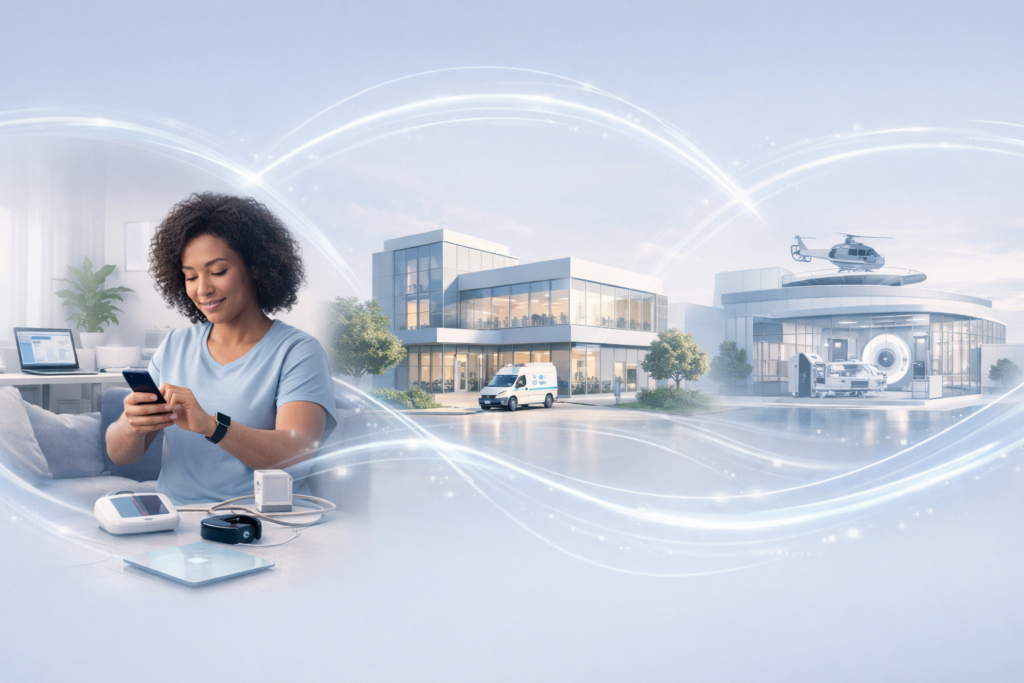
The vision of TransVer is a healthcare system that is seamlessly interconnected—from people’s homes to highly specialized hospitals. The focus is on independence, participation, and the best possible support for everyone involved. Through digitalization, connected devices, and flexible technological solutions, the transition toward modern regional health centers is to be scientifically supported and actively shaped.